Must Read

IMAGE-Fortis-launches-India-edition-of-IHH-Catalyst-to-support-hospital-ready-healthcare-startups-Caravanindie.com-.jpg

IHH Healthcare and Fortis Launch ‘IHH Catalyst’ to Strengthen India’s Healthcare Innovation Ecosystem

In a major step aligned with the Government of India’s Startup India and innovation-led growth agenda, IHH Healthcare (“IHH”), world’s leading multinational healthcare provider, in partnership with its subsidiary Fortis Healthcare, today announced the launch of ‘IHH Catalyst | Fortis India Edition’, a national healthcare innovation platform designed to accelerate the deployment of patient-centric, technology-enabled solutions across India’s hospital ecosystem.

IHH Healthcare and Fortis Launch ‘IHH Catalyst’ to Strengthen India’s Healthcare Innovation Ecosystem Read More »

Standard Diabetes Test May Mislead Diagnosis and Monitoring in South Asian Populations, New Analysis Warns

Standard Diabetes Test May Mislead Diagnosis and Monitoring in South Asian Populations, New Analysis Warns

A new evidence-based Viewpoint published online in Lancet Regional Health: Southeast Asia highlights that the widely used glycated hemoglobin (HbA1c) test, as available in India, may not accurately reflect blood glucose levels for millions of Indians, particularly in regions with high prevalence of anemia, hemoglobinopathies, and red blood cell enzyme (G6PD) deficiency. Led by Professor Anoop Misra and collaborators, the review questions reliance on HbA1c as a sole diagnostic or monitoring tool for type 2 diabetes in South Asia. HbA1c measurements primarily reflect the glycation of hemoglobin. Any condition that affects the quantity, structure, or lifespan of hemoglobin—such as anemia, hemoglobinopathies, or other red blood cell disorders—can distort HbA1c values and lead to misleading estimates of average blood glucose.

Standard Diabetes Test May Mislead Diagnosis and Monitoring in South Asian Populations, New Analysis Warns Read More »

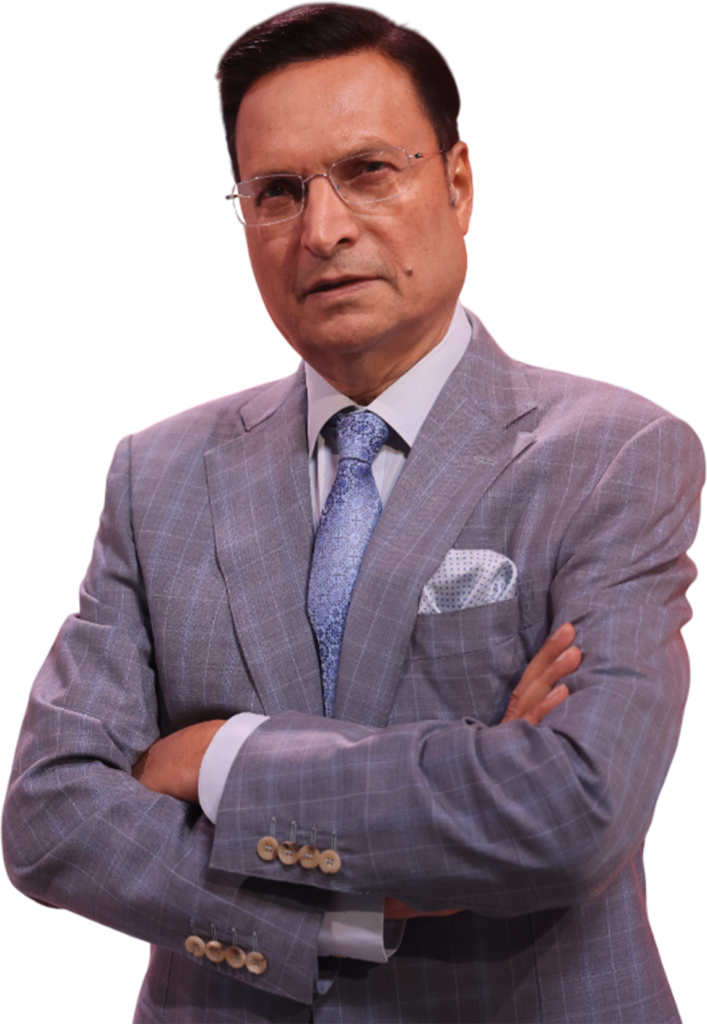
Court Summons Prime Congress Leaders in Defamation, Forgery Case Filed by Veteran Journalist Rajat Sharma

Delhi court on Monday ordered the summoning of Congress leaders Ragini Nayak, Pawan Khera, and Jairam Ramesh in a criminal complaint filed by senior journalist and India TV Chairman & Editor-in-Chief, Rajat Sharma, alleging defamation, forgery, and creation of false electronic records.

Court Summons Prime Congress Leaders in Defamation, Forgery Case Filed by Veteran Journalist Rajat Sharma Read More »

The Rise of Endourology a Minimal Invasive Procedure in Urological Surgeries; & Things Patients Need to Understand

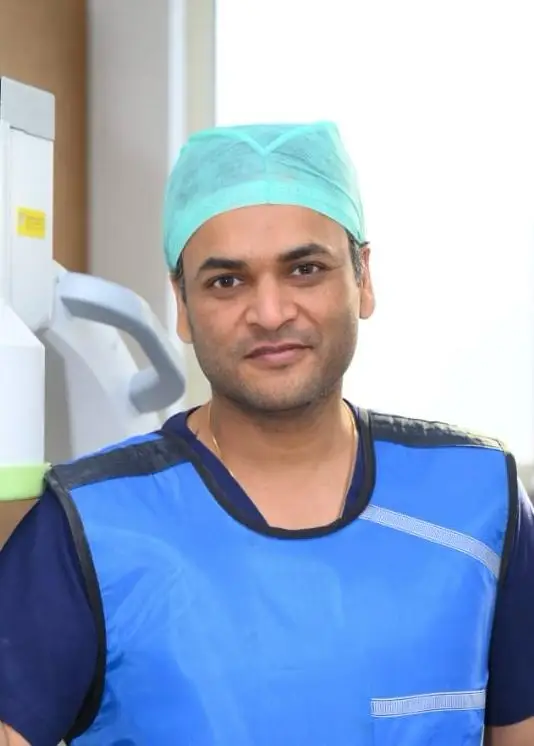
**Comment by Dr. Avinash Singh, Urologist (FEBU):**

Endourology and minimally invasive urology have truly transformed the way we treat urological diseases, offering patients safer procedures, faster recovery, and excellent outcomes without the morbidity of large incisions. With advances in endoscopy, lasers, laparoscopy, and robotic surgery, we are now able to manage complex stone disease, cancers, and reconstructive conditions with high precision and minimal discomfort. The myth that minimally invasive stone surgery leaves stones behind is unfounded—stone-free rates consistently exceed 90%, comparable or superior to open surgery. As a urologist trained internationally and currently working at a national transplant centre, I strongly believe that continued innovation, training, and research in minimally invasive techniques will further improve patient care and keep urology at the forefront of surgical excellence.

The Rise of Endourology a Minimal Invasive Procedure in Urological Surgeries; & Things Patients Need to Understand Read More »

India’s Tribal Health Crisis: Battling a Triple Burden Amid Gaps in Access and Care

Tribal health in India continues to face deep-rooted challenges, shaped by what public health experts describe as a “triple burden of disease”—the simultaneous presence of communicable diseases, widespread malnutrition, and a rising tide of non-communicable diseases.

India’s Tribal Health Crisis: Battling a Triple Burden Amid Gaps in Access and Care Read More »

Thyroid Awareness Month: Listening to the Body When Hormones Fall Out of Balance

Thyroid disorders are common in India, yet they often go undiagnosed for years because symptoms develop gradually and are easily mistaken for stress or lifestyle-related fatigue. The thyroid, though a small gland, plays a vital role in regulating metabolism, heart rate, energy levels, and body temperature. Early awareness and timely testing are key to preventing long-term health complications.

Thyroid Awareness Month: Listening to the Body When Hormones Fall Out of Balance Read More »

Protecting Cervical Health: Awareness, Screening and Timely Care Can Save Lives

Cervical cancer is one of the most preventable cancers, yet it continues to affect thousands of women in India every year. The tragedy is not just in the numbers but in the fact that most cases can be avoided with awareness, timely screening and early treatment. It develops slowly and often begins with persistent infection of the cervix by the Human Papillomavirus (HPV), a very common virus transmitted through sexual contact. In most women, HPV infections often clear on their own. However, when the infection persists, it can quietly cause abnormal cell changes that may turn cancerous over time if not detected early.

Protecting Cervical Health: Awareness, Screening and Timely Care Can Save Lives Read More »

Hans Dehmelt, Nobel Laureate for Isolating Electrons, Dies at 94

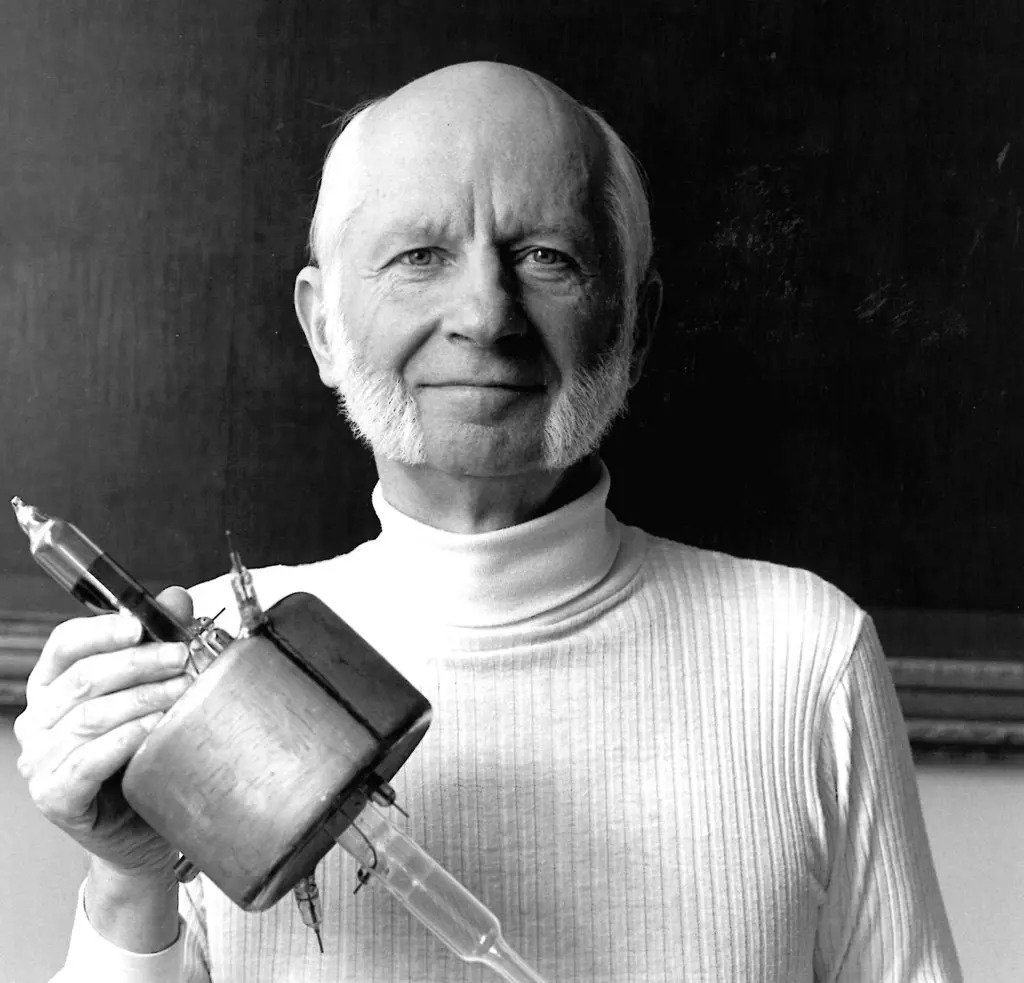
Hans Dehmelt, who shared the 1989 Nobel Prize in Physics for developing methods to trap a single ion or electron, allowing for a more precise way to measure their properties, died March 7 in Seattle. He was 94. His wife, Diana Dundore, confirmed his death. Dr. Dehmelt devised a configuration of magnetic and electric fields known as an ion trap that serves as a cage for charged particles like ions and electrons. Once the particle was trapped, scientists could study it. In 1973, Dr. Dehmelt used the technique to observe a single isolated electron. He was later able to observe single ions in the trap. Dr. Dehmelt’s work “allowed us to measure the electron’s magnetism” — and that of its antiparticle, the positron — and to make “ultraprecise spectroscopic measurements of a single trapped ion,” Robert Van Dyck Jr., a physics professor emeritus at the University of Washington, where he worked with Dr. Dehmelt, wrote in an email. Dr. Van Dyck added that trapping a single charged particle “isolates the specimen from outside interactions” — like pressure and temperature — “that would affect the basic accuracy of the measurements.” Dr. Dehmelt (pronounced DAY-melt) shared half of the Nobel Prize with Wolfgang Paul, who did similar work at the University of Bonn in Germany. The other half went to Norman F. Ramsey, whose work on the structure of atoms and molecules led to the development of the atomic clock. When Dr. Dehmelt was informed that he had won a portion of the Nobel, he called Ms. Dundore at 2 a.m. “It was Hans asking me to marry him” after a nine-year courtship, she said in an interview on Friday. “I was excited and congratulated him and was very happy with his call,” she added, “but I thought the discussion of marriage should wait until daytime, when I was thinking clearly.” They were married about a month later, in time for them to travel to Stockholm, where he received his prize. Editors’ Picks Remember Snow Days?The Zen of Ice Climbing36 Hours in Mexico City Appropriately, his lecture began with a quotation from Albert Einstein. “You know,” Einstein had said, “it would be sufficient to really understand the electron.” Hans Georg Dehmelt was born on Sept. 9, 1922, in Gorlitz, Germany, to Georg and Asta Dehmelt, who ran an apartment house in Berlin. Mr. Dehmelt also had a law degree. An early interest in radios inspired young Hans’s interest in physics, and when he was 10, he entered the prestigious Evangelische Gymnasium zum Grauen Kloster in Berlin on a scholarship. “I supplemented the school curriculum with do-it-yourself radio projects until I had hardly any time left for my class work,” he wrote in his Nobel Prize autobiographical sketch. “Only tutoring from my father rescued me from disaster.” After graduation, he volunteered for the German Army, in which he served on a gun crew. He was captured during the Battle of the Bulge and spent a year as an American prisoner of war before his release in 1946. After the war, he earned master’s and doctoral degrees at the University of Göttingen, where his teachers included the physicists Robert Pohl and Werner Heisenberg. “When I was a graduate student,” he told The Seattle Times in 1989, “my teacher drew a dot on the blackboard and said, ‘Here’s an electron,’ but nobody had ever isolated one.” It became his ambition to do that. In 1952, Dr. Dehmelt immigrated to the United States. He was a postdoctoral researcher at Duke University before joining the University of Washington three years later as a visiting assistant professor. He stayed there until he retired in 2002. In addition to Ms. Dundore, he is survived by a grandson and a great-granddaughter. His son, Gerd, died in 2013. His first marriage ended in divorce. Blayne Heckel, the chairman of the physics department at the University of Washington, said Dr. Dehmelt’s work had not only provided insight into the laws of nature, but also resulted in advances in radio frequency techniques and “our system of weights and measures.”


Hans Dehmelt, Nobel Laureate for Isolating Electrons, Dies at 94 Read More »

No Longer a Dream: Silicon Valley Takes On the Flying Car

During his recent test flight, Cameron Robertson, the aerospace engineer, used two joysticklike controls to swing the vehicle back and forth above Clear Lake, sliding on the air as a Formula One car might shimmy through a racecourse. The flight, just 15 feet above the water, circled over the lake about 20 or 30 yards from shore, and after about five minutes Mr. Robertson steered back to a floating landing pad at the end of a dock.

No Longer a Dream: Silicon Valley Takes On the Flying Car Read More »